


The coming together of decentralized finance (DeFi) and asset management is marking a big change in the financial world.
DeFi’s decentralized and transparent architecture offers a compelling alternative to traditional financial systems. It could improve how assets are managed, give investors better returns, and make investment opportunities more widely available — not only for institutional players but also for individuals.
The growth of DeFi has prompted traditional asset management firms to cautiously explore the potential benefits of DeFi integration. But what challenges do institutions and individuals face when entering the DeFi space, and what can drive the institutional adoption of DeFi? In this interview, Vasily Nikonov, the CEO of Velvet Capital, a decentralized asset management platform, shares his thoughts on the details and possibilities of institutions and private investors using DeFi.
Cointelegraph: BlackRock sees institutional adoption of DeFi many years away. Do you agree with it?
Vasily Nikonov: It depends on what type of institution you are talking about and where in the world they are located. Due to regulatory uncertainty, for larger U.S. institutions such as BlackRock, DeFi adoption is likely three years away. However, smaller players in Asia and the Middle East are already actively exploring DeFi and piloting new products.
CT: In your opinion, what can drive the institutional adoption of DeFi?
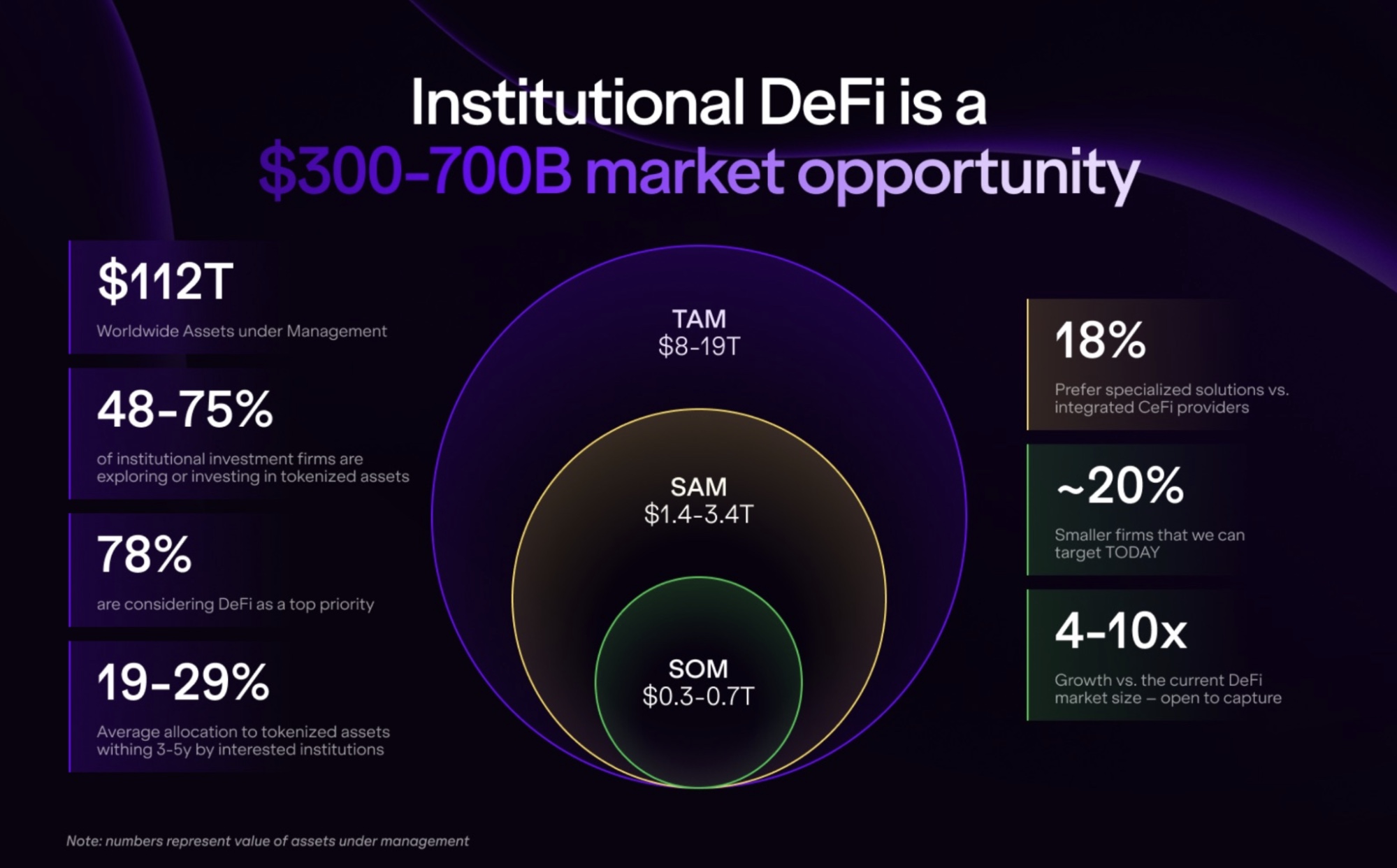
VN: The genie is out of the bottle — DeFi is inevitable. Asset management, a multi-trillion dollar sector, is poised for a transformative era as an estimated $8 to $19 trillion of assets, both native to Web3 and stemming from the real world, are expected to reside on the blockchain within the next decade. Recognizing the need for robust on-chain financial rails to manage these assets, an increasing number of professional asset managers are actively exploring DeFi.
Greater clarity and regularity will speed up this process — with a strong focus on the United States. But beyond that, institutions need professional-grade DeFi toolkits. Velvet Capital is here to provide the tools and infrastructure to make this transformation happen.
CT: What challenges do institutions face when entering the DeFi space?
VN: Institutions face many challenges in DeFi that aren’t prevalent in TradFi. For example, so far in 2023, over $1 billion has been hacked from DeFi protocols, a risk that isn’t as prevalent in TradFi. These hacks include bridges, compromised keys, liquidity pools drained, and more.
Another challenge is custody. Institutions, especially those based in the U.S., aren’t legally allowed to hold their own funds and are legally required to have a custodian. For example, Rule 206(4)-2 requires financial advisers to safeguard client funds and securities in their possession or over which they have authority to obtain possession. This rule makes it nearly impossible for U.S. financial advisers to interact with DeFi protocols on behalf of their clients because they must use a third-party custodian.
CT: How does Velvet Capital address all these challenges?
VN: Velvet Capital prioritizes security by implementing a comprehensive multi-layered security strategy, including audits from independent security firms such as PeckShield and Shellboxes. To further enhance security, we have launched a bug bounty program to incentivize white hat hackers to identify and report vulnerabilities in our contracts. Additionally, we employ real-time security monitoring solutions like Forta, Open Zeppelin, and Tenderly to detect and respond to potential threats promptly.
Regarding regulatory uncertainty, we recognize the need to adapt to evolving regulatory landscapes. While we cannot directly influence the policies of unfavorable jurisdictions, we have implemented features such as multisig vaults, optional KYC, and know your counterparty protocols to accommodate regulatory requirements and enhance compliance for institutions in certain regions. Nevertheless, we prioritize working with institutions in jurisdictions that foster a supportive environment for DeFi innovation.
CT: How does Velvet Capital differentiate itself from other decentralized asset management platforms?
VN: Institutional adoption of DeFi is impossible without a professional toolkit. That’s where Velvet Capital comes in. We stand out from the competition with our superior flexibility, functionality, and user interface.
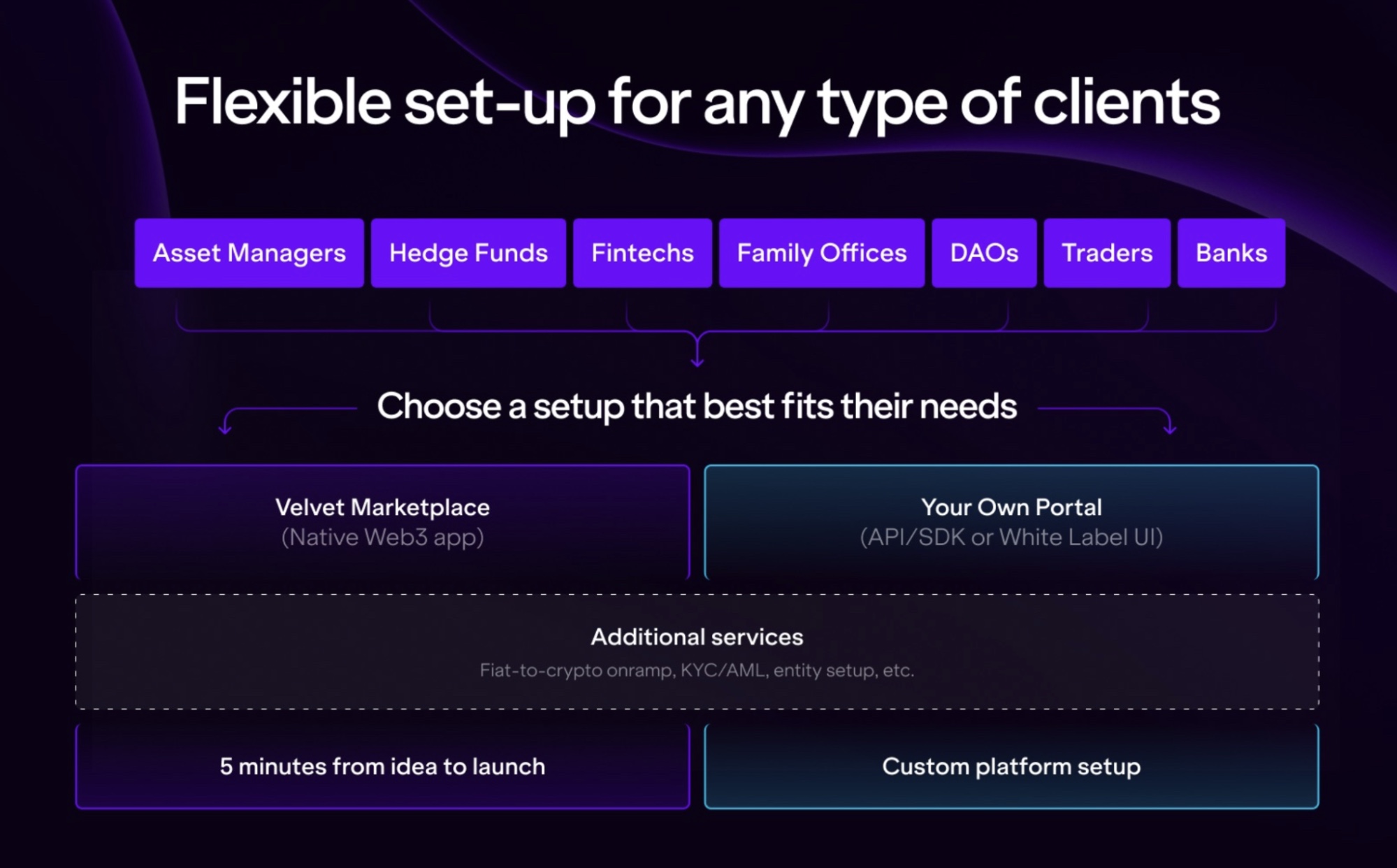
We provide all the infrastructure necessary to create and manage DeFi products with ease. Everyone could benefit from professional-grade DeFi infrastructure. The Velvet Marketplace is open, allowing anyone to set up their own vault and seamlessly manage a personal DeFi portfolio.
For larger institutional investors who want to leverage our DeFi Operating System while preserving their own brand and client relationships, we offer a white-glove DeFi-as-a-Service solution that enables the use of Velvet infrastructure on a white-label basis.
CT: Can you explain how Velvet Capital’s omni-chain DeFi operating system works and what its key features are?
VN: We provide a seamless and user-friendly platform that empowers anyone to create, manage, and launch on-chain funds, structured products, and tokenized portfolios. With Velvet, users can consolidate their DeFi interactions into a single platform and optimize returns through lending, staking, or liquidity provision across diverse assets and ecosystems.
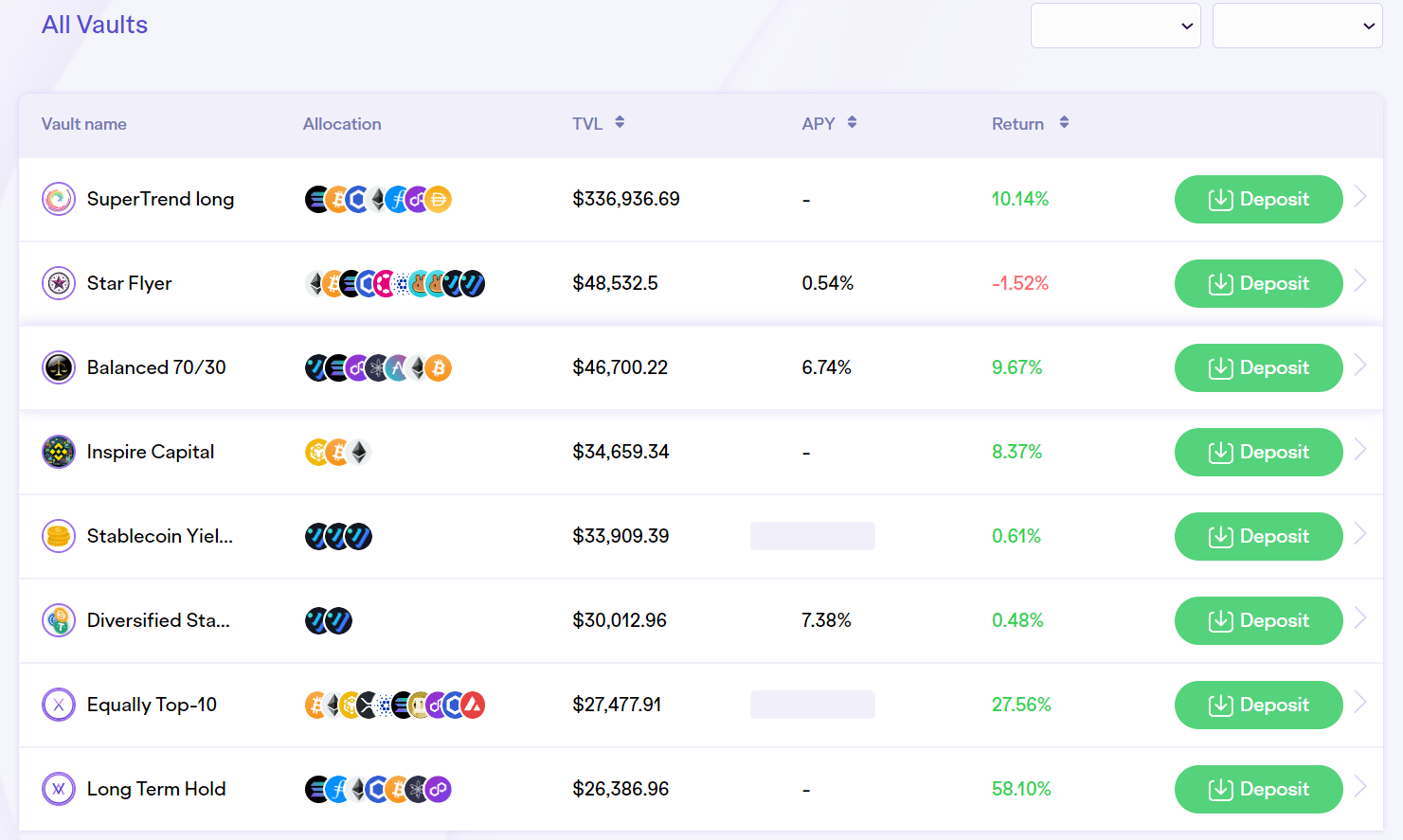
The Velvet Marketplace serves as a central hub for exploring top-performing DeFi vaults and crafting customized vaults tailored to individual strategies. Asset managers can swiftly establish new vaults by selecting the parameters that align with their objectives.
Additionally, Velvet Capital offers a suite of advanced features that enhance the DeFi experience, including superior on-chain trade execution, effortless intent-based yield farming, native account abstraction, comprehensive KYC/KYB permissioning capabilities, omnichannel exposure with derivative strategies, access to real-world assets (RWAs), and an upcoming API layer.
CT: What is the role of Velvet’s native governance token in decision-making processes related to institutional services/features/partnerships?
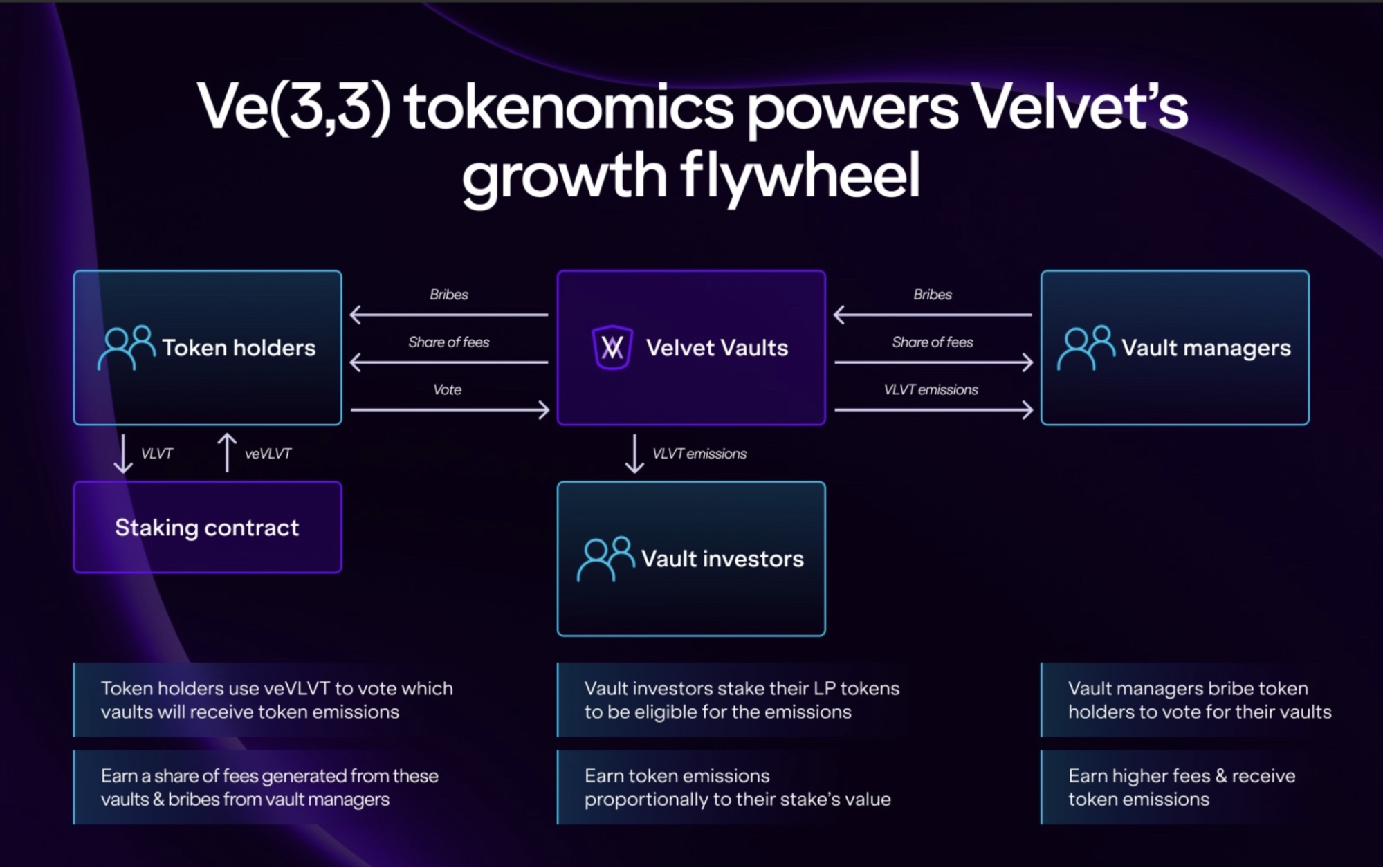
VN: Velvet introduces a new tokenomics model called ve(3,3), which combines the vote-escrow mechanism with (3,3) staking to promote long-term commitment and incentivize growth. The model aligns the interests of tokenholders, vault investors, and vault managers.
Our native VLVT token has not yet launched but will be used to reward vault managers, investors and referral program participants. Users can stake VLVT to earn veVLVT, a vote-escrowed token version, to vote on Velvet DAO decisions and earn VLVT rewards for voting.
CT: Are there any specific strategies or DeFi products tailored to institutional clients that Velvet Capital plans to launch in the near future?
CT: Velvetl’s institutional-grade product has successfully launched, marking a significant milestone for the platform. With notable growth metrics, including a top ranking among BSC ecosystem projects in terms of monthly TVL growth on DefiLlama, Velvet is positioned for continued expansion. Plans are underway to deploy on Arbitrum, Optimism, and Ethereum mainnet in the coming months, further solidifying Velvet’s presence in the DeFi landscape.


All Comments